Rifleman Tours Blog



Shell Shock was first brought to the attention of the army doctors during the First World War and was believed to be the result of a physical injury to ones nerves. It was given its name as late as 1917 by a Medical Officer called Charles Myers. Victims of Shell Shock often couldn’t eat or sleep and some suffered from physical symptoms such as uncontrollable shaking. Officers suffered the worst symptoms because they were called upon to repress their emotions in order to set an example for their men. Shell Shock was not fully understood...
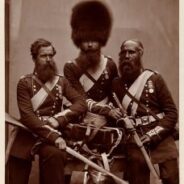
read moreWith ‘Movember’ almost here and the annual event involving the growing of moustaches during the month of November to raise awareness of men’s health issues, it seems an apt time to discuss facial hair in the British Army particularly the moustache. Over the years the British Army has had many dress codes but perhaps the strangest was the requirement to wear a ‘moustache’. In fact, it was actually law and from 1860 to 1916 it was a mandatory regulation for British Soldiers. Up until this time, facial hair was uncommon with only the...
read moreAs Bank Holiday weekend was quite a damp and miserable weekend, many of you would have been stuck in front of the television watching a good film and the channels didn’t disappoint in putting on some of the old favourites. One in particular which is shown every bank holiday is Zulu. Be honest, it’s an all time favourite of everyone with a smattering of interest in military history and quite easy to watch over and over again, even if it does drift slightly away from the facts. The battle started on the 22nd January 1879 and continued...
read moreIn the Nineteenth century a number of reform acts were passed which greatly changed the face of British politics. These reforms forced the elite and ruling class to pay particular attention to the many concerns put forward by the ordinary people. However, these acts still left a great many without the opportunity to vote. In total 40% of men aged over 21 that did not meet property requirements and could not vote and ALL women remained disenfranchised. Prior to the Great War there had been much campaigning with respect to the right to vote...
read moreMany of you will have been to the cinema recently to see the film Darkest Hour which depicts the forty days in which Winston Churchill was made Prime Minister and consequently his dealings with members of his cabinet and the evacuation of the BEF from France via Dunkirk. Gary Oldman plays him wonderfully, although I would have liked his voice to sound slightly more like the great man’s. Having read quite a few books about Churchill, and being one who enjoys a Cuban cigar every now and then, I have been asked lots of questions about Sir...
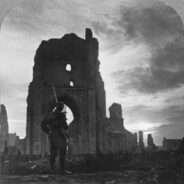
read moreMany of you have been on a battlefield tour with Rifleman and stayed in the beautiful Belgian city of Ypres. People are amazed when told that the town was more or less completely destroyed during the four years of the Great War to the extent that by the end of the war, you could sit on horseback in the Grote Markt and see from one side of the city to the other such was the destruction. But what also fascinates visitors is that it has been completely rebuilt in its former image and these few paragraphs tell that story. Ypres is a medieval...
read moreIf you study World War One and are a follower of football then the name Walter Tull should be instantly recognisable to you. If not then here is his story. Walter Tull’s father was a carpenter from Barbados in the West Indies who came to England in the 1880’s and married a local woman. Adversity was no stranger to Walter being of mixed race and at the age of ten things became worse when both his mother and father died. From then on Walter and his brother Edward were brought up in a Methodist Orphanage in Bethnal Green, East London. Excelling...
read moreIt’s that time of the year again where you struggle to think of that perfect Christmas gift for the person who has everything? Let us help! We have a wide choice of two, three, four and five day WW1 and WW2 battlefield tours. We even have gift vouchers that can contribute to a battlefield tour. We can arrange a personal visit to a particular cemetery or memorial to remember a family relative. Maybe someone you know has always wanted to witness, or take part in, The Last Post Ceremony at the Menin Gate in Ypres or are they partial to a Belgian...
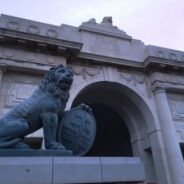
read moreFor the last seven months the Last Post Ceremony under the Menin Gate has taken place under the watchful eyes of the Menin Gate Lions. These two proud looking beasts originally stood as guardians either side of the Menin Gate before and up to the First World War. Damaged in the bombardment and destruction of Ypres they were given to the Australian Government by the people of Ypres as a thank you to the sacrifice by 13,000 Australian soldiers in Belgium. Their full story can be read in one of our earlier blogs click here. Once in Australia...
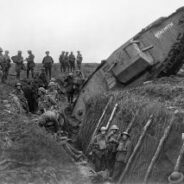
read moreThe Battle of Cambrai was an attack launched in November 1917 against the vaunted Hindenburg Line and is known for the first use of tanks en masse having been used firstly on the Somme in September 1916. These great lumbering machines helped break the deadlock on the Western Front but were criticised for being prone to mechanical failure and also being very slow which therefore made them easy targets for heavy artillery. Attempts to use them in battle before Cambrai had all ended in disaster Cambrai was chosen as the place for using tanks...
read more