Rifleman Tours Blog



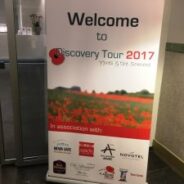
On the weekend of 20th January we were kindly invited to attend the Discovery Tour 2017. Tour operators from all over the country were met by coaches in the UK and transported to the town of Ypres where we would be able to meet a number of hoteliers and companies who cater for the tourism market. It felt most odd but a welcome change for us to be the guests on a tour and not the organisers! We stayed at our usual hotel in Ypres, the family run Albion, which over the years has become our home away from home and, as always, the group received a...
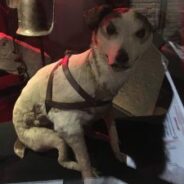
read moreRecently on one of our battlefield tours, the group visited the In Flanders Fields Museum’. In the museum was a stuffed Jack Russell called Torpille who belonged to a Jules Van Neste, a Belgian Chaplain in World War One, and used as a rat catcher. Our photo shows Torpille in the museum not looking his best thanks to the taxidermist of the time! Many of the battlefield tour party then began to ask questions regarding the animals that served in the Great War, and there were many, of all types. During the Great War, 16 million animals served and...
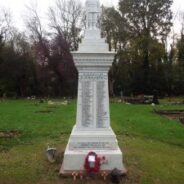
read moreThe Commonwealth War Graves Commission care for cemeteries and memorials at 23,000 locations, in 154 countries. In Belgium and Northern France, where many of our World War One battlefield tours take place, there are 959 CWGC cemeteries and memorials. Each one is meticulously maintained by the gardeners of the CWGC and are all fine resting places for our honoured dead. To visit them all would probably take a thousand battlefield tours or more. But, how did it all begin? The collection and identification of bodies prior to the First World War...
read moreWhen I am conducting a battlefield tour I often get asked how a visitor to the WW1 battlefield sites could find out more about a relative who has served in the Great War. So in this blog I have listed the methods that can be used to research an ancestor’s military career. Firstly the researcher has to establish whether the serviceman was killed in the war or if he survived. For those killed in the Great War there are several accessible sources however, for those who survived there a far too few records available and unfortunately it can...
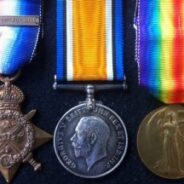
read moreMany people go on battlefield tours and treat them as a pilgrimage to see where a relative fought in World War One and in some cases died. Many of them have their relative’s medals and some wear them with great pride, especially on our Armistice Day Group Tours, myself included. But what many do not know is what the campaign medals were awarded for. I hope I can help answer some questions. Most campaign medals awarded to servicemen for the Great War were either trios or pairs, a trio of medals being a 1914 or 1914-5 Star, War Medal and...
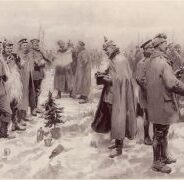
read moreThe Christmas truce of 1914 tends to be looked at in a romantic light rather than one of any political significance. The war had been raging for almost five months and all sides had suffered heavy casualties. With a heavy winter looming, both sides dug in and static trench warfare became the norm and with it in places a ‘live and let live’ policy existed where the British didn’t bother the Germans and vice versa and so all were left in peace. A number of truces had taken place between the opposing forces and can be dated back to early...
read moreNext year, 2017, sees a number of significant World War One anniversaries taking place and Rifleman has tours that cover them all. The first anniversary we come to is the 100th anniversary of the Battle of Vimy Ridge which was, in the great scheme of things, part of the Battle of Arras. This battle took place on Easter Monday, 9th April 1917. It was primarily part of a joint offensive with the French and turned out to be one of the most lethal of any fought by the British Army throughout the Great War. Survivors of the battle claim it was the...
read moreThis year saw us take our fifth consecutive group to Ypres to commemorate the Armistice and there really is nowhere else that creates such an ambience over this period. Ypres was held by British and Allied forces for the duration of the First World War and in that time the town was practically destroyed. In fact if you were in the Grote Markt on horseback at the end of the war, you could see from one end of the town to the other as the level of destruction was so great. But today it has been rebuilt in its original image and is hardly...
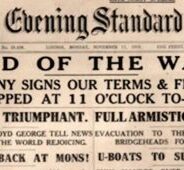
read moreBy the autumn of 1918 Germany began to realise that she could not fight on much longer. Her allies were withdrawing from the fight and her people had started to rebel. On 29 September, the Supreme German Army Command informed Kaiser Wilhelm II and the Chancellor, Count Georg von Hertling, that the military situation facing the German army was hopeless. General Erich Ludendorff informed them that he could not guarantee being able to hold the front for another two hours let alone two weeks and that a ceasefire must be sorted. On 3 October Count...
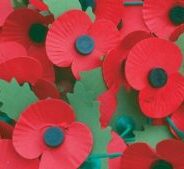
read moreThe poppy is the symbol of remembrance (and this should be explained explicitly to FIFA who helped install a WW1 memorial at Plugstreet to the Christmas Truce football match – what are they thinking?). Originally linked with the Great War, it has since become a symbol that allows us to remember our fallen armed servicemen who fell in many other wars and conflicts from World War Two to present day Iraq. But how did the Poppy come to be this symbol of remembrance that we wear with pride every 11th of November to commemorate the Armistice of the...
read more